The snow-capped peaks, serene dal lakes, and whispering chinar trees have long made Kashmir a paradise on Earth. However, beneath its breathtaking geography lies a sensory treasure trove that is increasingly capturing the attention of food enthusiasts worldwide: its ancient, intricate, and deeply revered culinary heritage.
Learning the art of cooking in the backdrop of the Valley is not just about following recipes; it is a profound lesson in patience, precision, and historical synthesis. More importantly, escaping to this pristine landscape to master a craft offers a profound mental health sanctuary, acting as a powerful antidote to a boring life defined by pressure and anxiety.
The Masterclass of the Wazwan Tradition
Understanding the Multi-Course Royal Feast
At the heart of Kashmiri culinary arts is the Wazwan, a lavish multi-course meal that represents the pinnacle of royal hospitality. Traditionally featuring up to 36 distinct courses, preparing a Wazwan is considered a rare art form passed down through generations of master chefs known as Vaste Wazas.
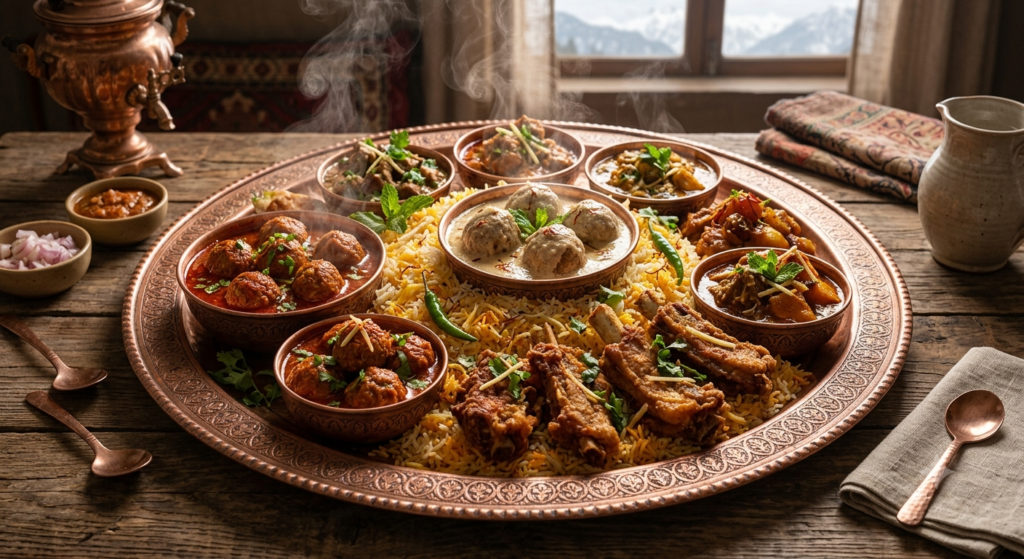
To truly understand Kashmiri cuisine, one must study the meticulous preparation behind signature dishes like:
- Rista: Hand-pounded, velvety lamb meatballs simmered in a fiery, saffron-and-paprika-infused gravy.
- Gushtaba: Giant, velvety mutton balls poached gently in a rich, velvety yogurt-based broth.
- Tabak Maaz: Flawlessly braised, spice-infused lamb ribs fried in clarified butter until beautifully crisp.
Honing your culinary skills in this environment forces you to respect the raw ingredient. For instance, the meat for Rista and Gushtaba must be painstakingly minced using a wooden mallet on a flat stone immediately after slaughter—a technique that requires impeccable rhythm, physical endurance, and a deep understanding of meat textures.
The Alchemy of Kashmiri Spices and Aromatics
Balancing Heat and Fragrance Without Onions or Garlic
One of the most fascinating aspects of traditional Kashmiri cooking techniques is the reliance on a distinct, alternative pantry. Traditional Kashmiri Pandit cooking, for example, completely avoids the use of onions and garlic, relying instead on the clever use of hing (asafoetida) and curd (yogurt) to create rich, deeply savory bases.
Irreplaceable Ingredients of the Valley
| Ingredient | Role in Kashmiri Cuisine |
| Kashmiri Saffron (Kesar) | Imparts a brilliant golden hue and a delicate, aristocratic aroma to both savory pulavs and sweet desserts. |
| Kashmiri Red Chili | Provides a signature, vibrant crimson color (Rogan) without overwhelming the palate with searing heat. |
| Praan (Shallot Paste) | Utilized primarily in Muslim Wazwan preparations to give gravies a deep, caramelized, and pungent undertone. |
| Dry Ginger (Sonth) & Fennel (Saunf) | The foundational spice duo that warms the body during harsh Himalayan winters and aids in digesting heavy meats. |
Mastering the use of these ingredients teaches a chef the fine art of nuance. It challenges the conventional culinary school notion that great depth in a sauce can only be achieved via a standard mirepoix or a heavy onion-tomato paste.
A Landscape of Preservation and Sustainability
The Winter Culinary Toolkit of the Himalayas
Kashmir’s harsh winter topography historically forced its inhabitants to become masters of food preservation. Developing culinary skills in this specific geographical context introduces a chef to the brilliant world of sun-dried vegetables (Hokh Syun).
From rehydrating sun-dried bottle gourds (Al-Hach) and eggplants (Wangan-Hach) to perfect fish-and-radish combinations (Gaad te Muji), the regional kitchen is a case study in seasonal sustainability. Learning how to rehydrate these ingredients while retaining their texture and layering them with heavy winter spices expands a cook’s repertoire in zero-waste and sustainable gastronomy.
Culinary Therapy: Escaping the Grip of Modern Stress
How the Kashmiri Kitchen Rejuvenates the Mind
Step away from the relentless notifications, corporate pressure, and chronic anxiety of modern life. Entering a Kashmiri kitchen offers an unexpected form of culinary therapy that completely rejuvenates a tired soul.
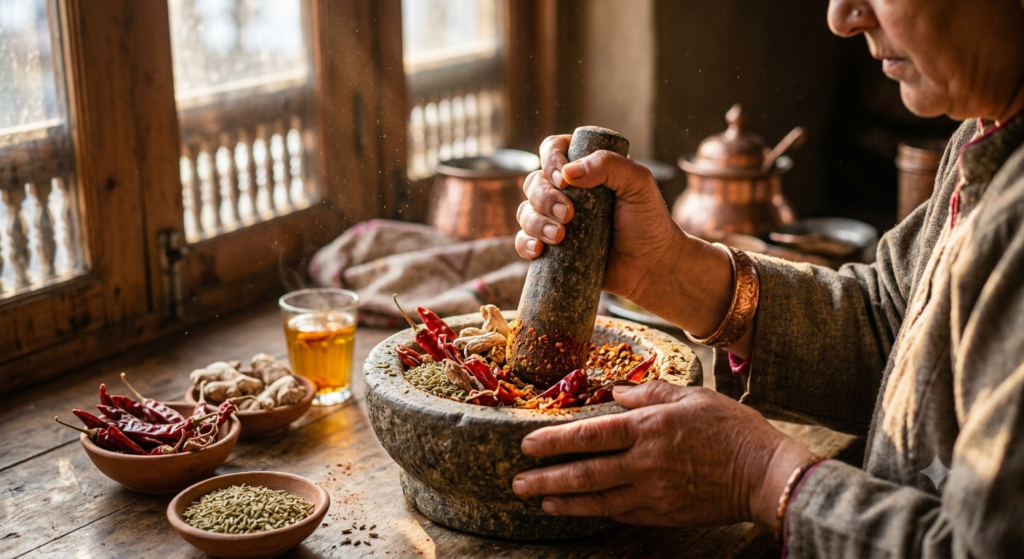
- The Mindfulness of Rhythmic Cooking: The physical act of slow-stirring a copper pot (degh) over wood fire heat or pounding spices with a mortar and pestle forces your mind into the present moment. This rhythmic, sensory engagement acts as a form of active meditation, melting away accumulated stress.
- Alleviating Anxiety Through Aromatherapy: The valley’s signature spices are natural mood-boosters. Breathing in the steam of freshly crushed Kashmiri cardamom, blooming saffron, and warm cinnamon during the cooking process has been shown to lower cortisol levels, quietening a restless, anxious mind.
- Breaking the Monotony of a Boring Life: When daily routines feel stagnant, learning a complex heritage art form provides a surge of dopamine and a renewed sense of purpose. It replaces the dull hum of everyday deadlines with the vibrant colors and rich textures of an ancient culture.
Beyond the Plate: Communal Harmony and Ritual
The Culture of the Trami and Noon Chai
Culinary skills in Kashmir are inherently tied to social fabric and community bonding. The traditional banquet layout involves four people sharing a large, beautifully engraved copper platter called a Trami. This communal eating style dictates specific etiquette, portion control, and a shared appreciation of the food, turning a simple dinner into a choreographed ritual of unity.
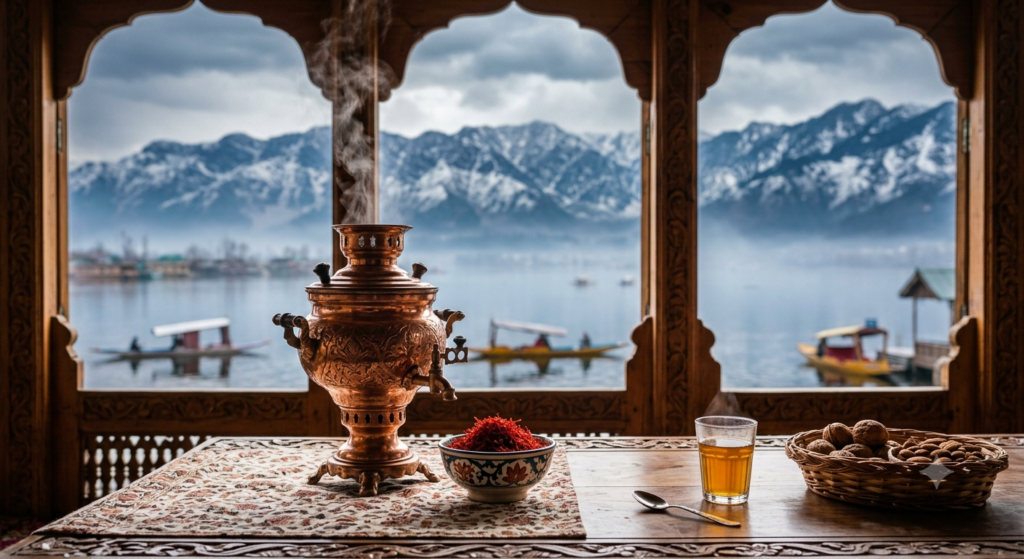
Furthermore, no culinary exploration of the region is complete without mastering its tea rituals. From brewing the iconic pink, salty Noon Chai (which utilizes baking soda and prolonged aeration for its unique chemistry) to infusing the perfect digestive Kahwa (green tea with saffron, cinnamon, and crushed almonds), the liquid gastronomy of Kashmir is as complex as its mains.
Whether you are an aspiring professional chef or someone looking to heal from a boring life of pressure and anxiety, immersing yourself in the culinary tapestry of Kashmir refines your palate, sharpens your skills, and rejuvenates your spirit.